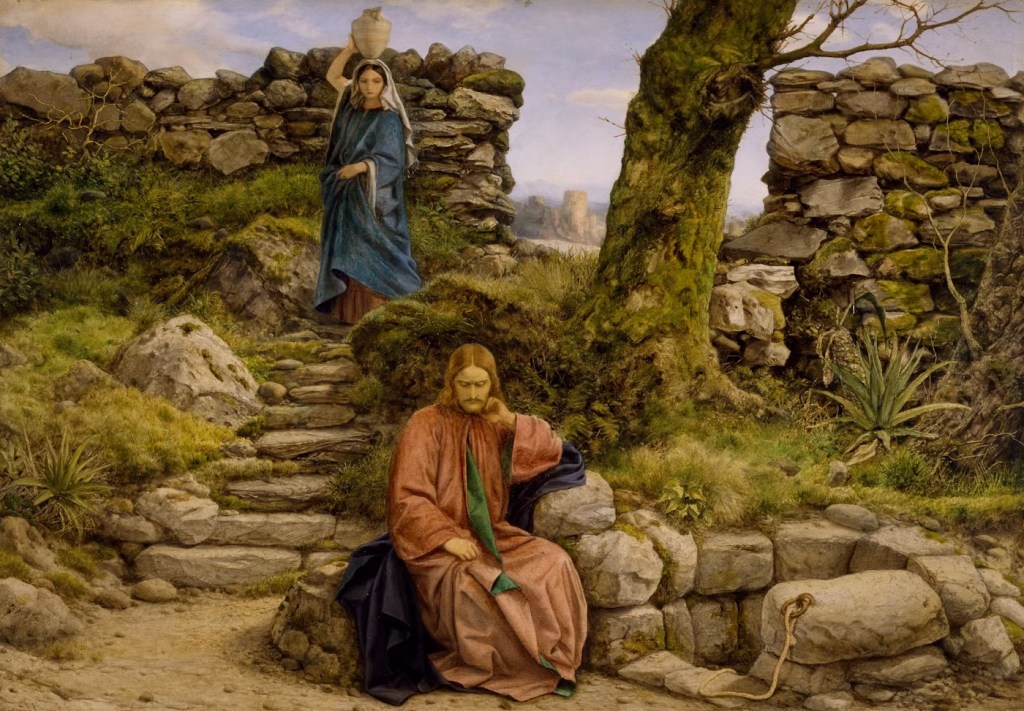
One of the most powerful stories in the Gospel of John is Jesus’ encounter with the Samaritan woman at the well (John 4:1–42). What looks like an ordinary conversation over water is, in fact, one of the most radical demonstrations of the Kingdom of God—an intentional outreach to a marginalized woman, breaking centuries of hostility, and revealing the greatest mystery of true worship.
1. A Divided History: Jews and Samaritans
To understand the depth of this encounter, we need the backdrop. Samaritans were descendants of Israelites who intermarried with foreigners after the Assyrian conquest of the Northern Kingdom (2 Kings 17:24). They held to the Pentateuch but rejected the rest of the Hebrew Scriptures, worshiping on Mount Gerizim instead of in Jerusalem.
To Jews, Samaritans were impure—heretical half-breeds. By the first century, this animosity had festered for centuries. Jews would even take longer routes just to avoid Samaritan territory. Against this backdrop of hostility, Jesus does something shocking—He goes straight through Samaria.
2. The Intentional Journey
John 4:4 says, “Now He had to go through Samaria.” Geographically, He didn’t. Spiritually, He did. This “must” reflects divine necessity. Jesus was on a mission to break barriers, showing that the Kingdom of God was not exclusive to Jews, but open to all who would believe.
3. The Conversation at the Well
At noon, a Samaritan woman arrives to draw water—avoiding the crowds, perhaps because of her reputation. Jesus asks her: “Will you give me a drink?”
That question was revolutionary:
• Cultural Barrier: Jews didn’t associate with Samaritans.
• Gender Barrier: A Jewish rabbi rarely engaged women publicly.
• Moral Barrier: She had a broken past—five husbands, and now living with another man.
Yet Jesus humbled Himself, asking her for water. With this simple request, He bridged hostility, gender norms, and shame.
4. Living Water and Revelation
From water, Jesus turns to living water—the gift of eternal life and the Holy Spirit. He exposes her past, not to condemn, but to awaken her to her deeper thirst.
Her understanding grows step by step: first, He is a Jew. Then, a prophet. Finally, she begins to see Him as the Messiah.
5. Worship Beyond Walls
The woman raises the centuries-old religious debate: “Our ancestors worshiped on this mountain, but you Jews claim Jerusalem is the place” (John 4:20).
Jesus’ answer is revolutionary: “A time is coming when you will worship the Father neither on this mountain nor in Jerusalem… true worshipers will worship the Father in spirit and in truth” (John 4:21–24).
Worship was no longer tied to sacred geography or ritual—it would be rooted in Spirit-filled relationship with God.
6. From Shame to Witness
The woman who once avoided people becomes the first evangelist in Samaria. She runs to her town, declaring: “Come, see a man who told me everything I ever did. Could this be the Messiah?” (John 4:29).
Many believe because of her testimony. Even more believe after meeting Jesus themselves. Remarkably, He stays with them for two days—something unthinkable for a Jewish rabbi.
Key Lessons for Us
1. Reconciliation – Jesus broke centuries of hostility, showing His mission is to reconcile us to God and each other.
2. Inclusivity of the Gospel – No race, gender, or reputation disqualifies anyone from God’s love.
3. True Worship – Worship is not about ritual or place but spirit and truth.
4. Personal Encounter → Public Witness – An encounter with Jesus transforms shame into bold testimony.
5. Divine Necessity – Jesus “had to” meet her. Our divine appointments with Him are never by accident.
This encounter at the well is more than a story—it’s a prophetic signpost. The gospel was breaking past Jewish boundaries, reaching the outcast, and ushering in a new era of Spirit-led worship for all nations. Jesus doesn’t just meet us at the well of our shame; He turns it into a fountain of life for others.
Shalom! Rev. Ron
 Virtuous Living