
Learning to Hear the Whisper
It was one of those ordinary afternoons that don’t announce themselves as meaningful.
The kind where the sun lingers a little longer than expected, and the house carries the soft hum of return—bags dropped, shoes slipped off, stories waiting to be told.
My seven-year-old daughter walked in with a brightness that felt louder than her voice. Before I could even ask how her day went, she began—eyes wide, hands moving, words tumbling over themselves.
“Mummy, today in IT we learned about ciphers!”
I smiled, nodding with the confidence of a mother who assumes she will understand. But within seconds, I realized I was far from it.
She spoke about encoding messages, secret patterns, hidden meanings—her excitement building with every example she tried to explain. And there I was… completely lost.
Yet she wasn’t discouraged by my confusion. If anything, it made her even more eager. There was a joy in her voice—not just because she had learned something new, but because she understood it. She had been given a key… and suddenly, a whole world made sense to her.
That moment stayed with me.
Later that evening, long after she had moved on to something else, I found myself thinking about her words. Curiosity nudged me to look deeper.
A cipher, I learned, is a method of encoding communication so that it cannot be easily understood by just anyone. It requires a key—something that unlocks meaning. And to decipher is to interpret that message, to bring clarity to what once seemed hidden.

Simple enough.
But the more I sat with it, the more it didn’t feel like just a technical concept.
It felt… familiar.
Because life itself is filled with ciphers.
There are conversations where words mean more than they say—shared expressions that only certain people understand. There are cultural symbols and practices that speak loudly to those within, yet remain silent to those outside. There are communities bound together by a language that cannot always be explained, only experienced.
Understanding, I realized, is often selective.
Not because something is being intentionally hidden—but because not everyone holds the key.
And then, almost quietly, my heart leaned into a deeper knowing.
What if this is how God speaks too?
There is a story in Scripture that has always felt both powerful and deeply tender—the moment Elijah encounters God in 1 Kings 19:11–12.
Elijah stood on the mountain, waiting for God.
A mighty wind tore through the rocks.
An earthquake shook the ground beneath him.
Fire passed before his eyes.
Each one dramatic. Each one undeniable.
And yet… God was not in any of them.
Then came something so subtle it could easily be dismissed—a still small voice. A gentle whisper.
And that was where God was.
It is both comforting and confronting.
Because if we are honest, we often expect God to speak in ways that are impossible to miss. We look for the dramatic. The loud. The unmistakable.
But God, in His wisdom, often chooses a different language.
A language that requires stillness.
A language that invites attention.
A language that is learned… not stumbled upon.
Like a cipher.
God’s voice is not absent—it is simply not always obvious.
It carries meaning, direction, and instruction. But to discern it, we must hold the key.
And that key is not found in striving—it is found in relationship.
Scripture reveals this pattern over and over again.
In 1 Samuel 3:10, young Samuel hears God call his name, but recognition comes with guidance and repeated response.
In Job 33:14–15, we see that God speaks in dreams and visions—ways that bypass the noise of our waking minds.
In Numbers 12:6–8, there are levels of communication—some through symbols, others through direct encounter.
In Habakkuk 2:1, the prophet positions himself intentionally, choosing stillness so he can hear.
And in John 10:27, Jesus says, “My sheep hear my voice.” Not occasionally. Not randomly. But as a natural expression of relationship.
Hearing God is not reserved for a select few.
But understanding Him requires something deeper than proximity—it requires attunement.
The truth is, what feels like silence is often a language we have not yet learned to interpret.
And just like any language, it takes time.
It takes sitting with His Word until it is no longer just text, but truth that shapes how we think and respond.
It takes moments of quiet where we resist the urge to fill every space with noise.
It takes consistent fellowship—returning again and again, even when nothing seems to be happening.
Because something is happening.
Our ears are being trained.
Our hearts are becoming familiar.
Our spirits are learning the patterns of His voice.
God is not hiding from us.
He is inviting us closer.
Closer than hurried prayers.
Closer than occasional devotion.
Closer into a place where His whispers become clearer than the noise around us.
And perhaps that is the most beautiful part of it all—
The “secret” is not meant to exclude us.
It is meant to draw us in.
So we learn to pause.
To listen.
To dwell.
To meditate.
Until what once felt like a mystery becomes unmistakably known.
Until the whisper becomes a voice we recognize anywhere.
Until we, like my daughter that afternoon, carry the quiet joy of someone who has been given a key… and now understands.
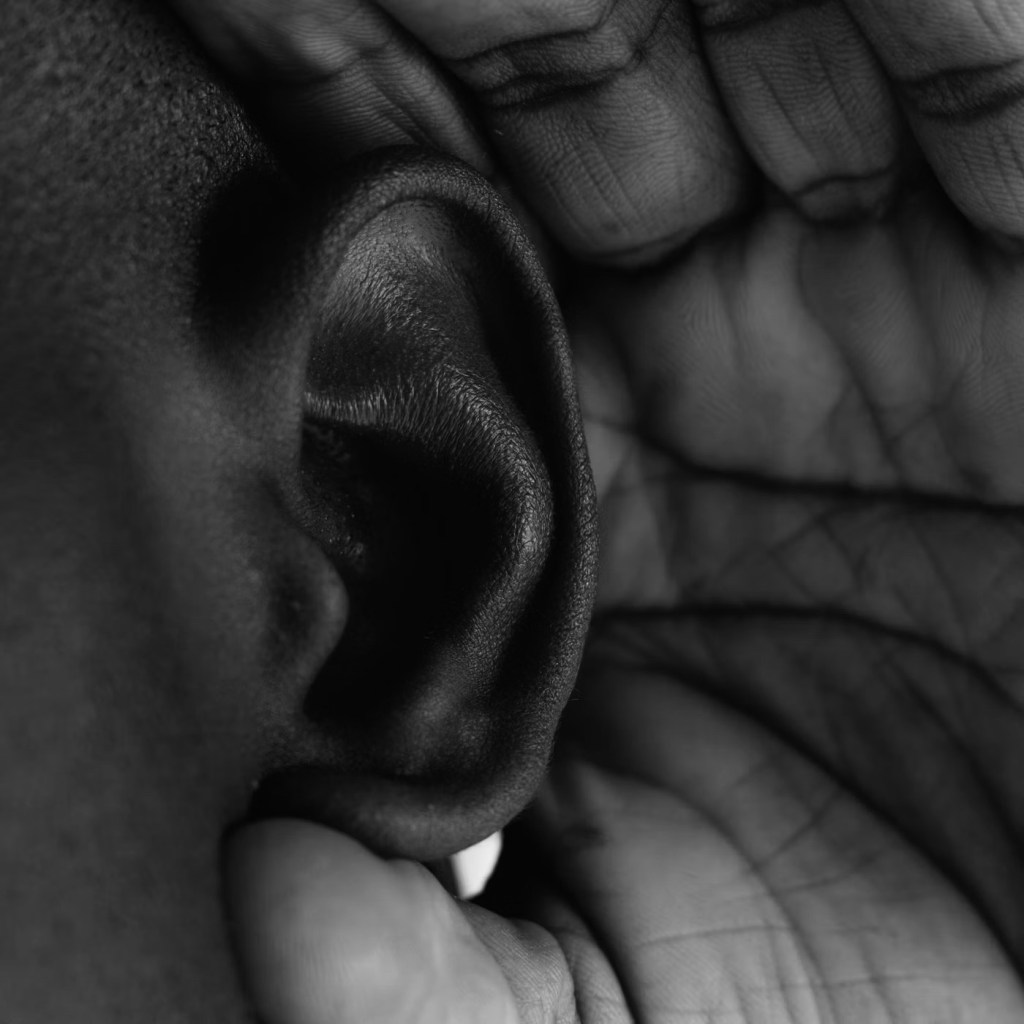
Because in the end,
what sounds like silence to others
may be clear, steady instruction
to the one who has learned to listen.
With Love, Esinam.

